
When it comes to climate action, many of us are doing more than we think: We fly less. We eat differently. We insulate our homes.
We make careful choices every day — And yet, we often keep those choices quiet.
We worry about sounding self-righteous. We don’t want to make others uncomfortable. Or we feel that our individual actions are too small to matter. But this silence – what psychologists call “climate silence” – is one of the biggest barriers to real, lasting change. If we want to move faster and further, we need to start “doing good louder“.
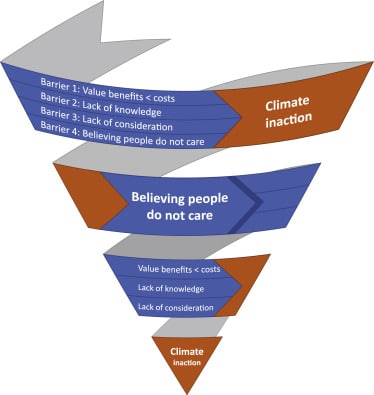
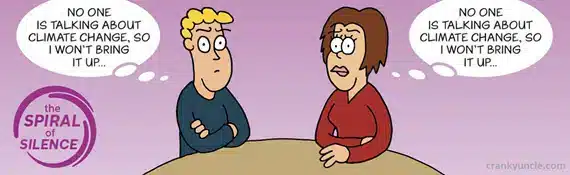
Most people believe that others don’t care as much about the climate as they do. Research shows this is a systematic misunderstanding, not reality. When we look around and don’t see visible action, we assume that concern is rare. That belief makes us hesitate. And when we hesitate, nothing changes.
This creates a spiral of inaction:
- We think others don’t care;
- That belief holds us back;
- Our inaction then confirms the false idea that nobody cares.
Over time, inaction becomes a self-fulfilling prophecy.
The irony is that across Europe, studies show that most people value nature, fairness, and the wellbeing of future generations more than personal gain. These values just aren’t visible.
The Reality: Concern is widespread
Despite the silence, concern about climate change is strong and growing. Around 70% of people worldwide say they are more worried about the environment now than they were before 2021.
More than half of people think about climate change every week, and four out of five believe governments need to do more. But when these views stay private, leaders underestimate public support for stronger climate policies. Silence doesn’t mean indifference. It means concern without a signal.
Why visibility matters more than we think
Human behaviour is strongly shaped by what we see others doing. When actions are visible, they feel safer, more normal and easier to copy.
This is what researchers mean by “doing good louder”; not showing off, but letting others see and hear that climate-friendly choices are shared values.
From private choices to collective impact
We often focus on reducing our ecological footprint: the harm caused by our own lifestyle. While important, this keeps responsibility private and hidden. The idea of a socio-ecological handprint shifts the focus. It’s about the positive impact we create when our actions influence others or help change systems.
Taking the train instead of flying reduces your “environmental footprint“.
– Talking about WHY you chose the train grows your “handprint“.
Changes in food, travel and housing can reduce personal emissions by 6% to 16%. When those changes are visible, they help shape new social norms.
Different people, different starting points
Not everyone is ready to make the same changes, and that’s normal. Research shows that people tend to engage in different ways:
- Convenient actions: easy steps like reducing food waste or car-sharing (around 6% impact);
- Conscious choices: health- or efficiency-driven changes like eating less meat (around 12% impact);
- Enthusiastic action: bigger, values-led choices like avoiding flights (around 16% impact).
What matters is not where people start, but that action is visible and supported.
Climate courage grows in groups
Speaking up about climate choices can feel uncomfortable. Climate is a moral issue, and people don’t want to sound judgemental or be labelled a “preacher”. That’s why climate courage matters: the ability to act and speak even when it feels awkward or uncertain.
This courage grows strongest in groups. When people act together, they feel less alone and more effective. Research shows that lasting behaviour change happens when information is combined with social interaction and shared feedback. Acting together creates a sense of “joint power”: the feeling that change is possible when we move as a group.
Breaking the silence changes the system
Talking about climate action is not a side issue, but a high-impact intervention. Changing what is visible and discussed can shift behaviour across entire communities. Sustainability only becomes “contagious” when people can see and hear it happening. When one person speaks up, it becomes easier for the next.
Visible action lowers the barrier for others. It turns quiet concern into shared momentum. Over time, this creates a spiral of action, where doing something good becomes the norm rather than the exception.
We don’t need everyone to do everything. We need more people to stop doing good quietly.
By doing good louder, we break the climate silence, and make space for the future we already want.
Also read:
- GAP’s approach to behaviour change
- A spiral of (in)action: Empowering people to translate their values in climate action
- Climate Heroes: How individual actions can shape society
- Young People lead the way in signalling lifestyle changes to cut emissions
- Environmental Choices: Lessons from behaviour change research