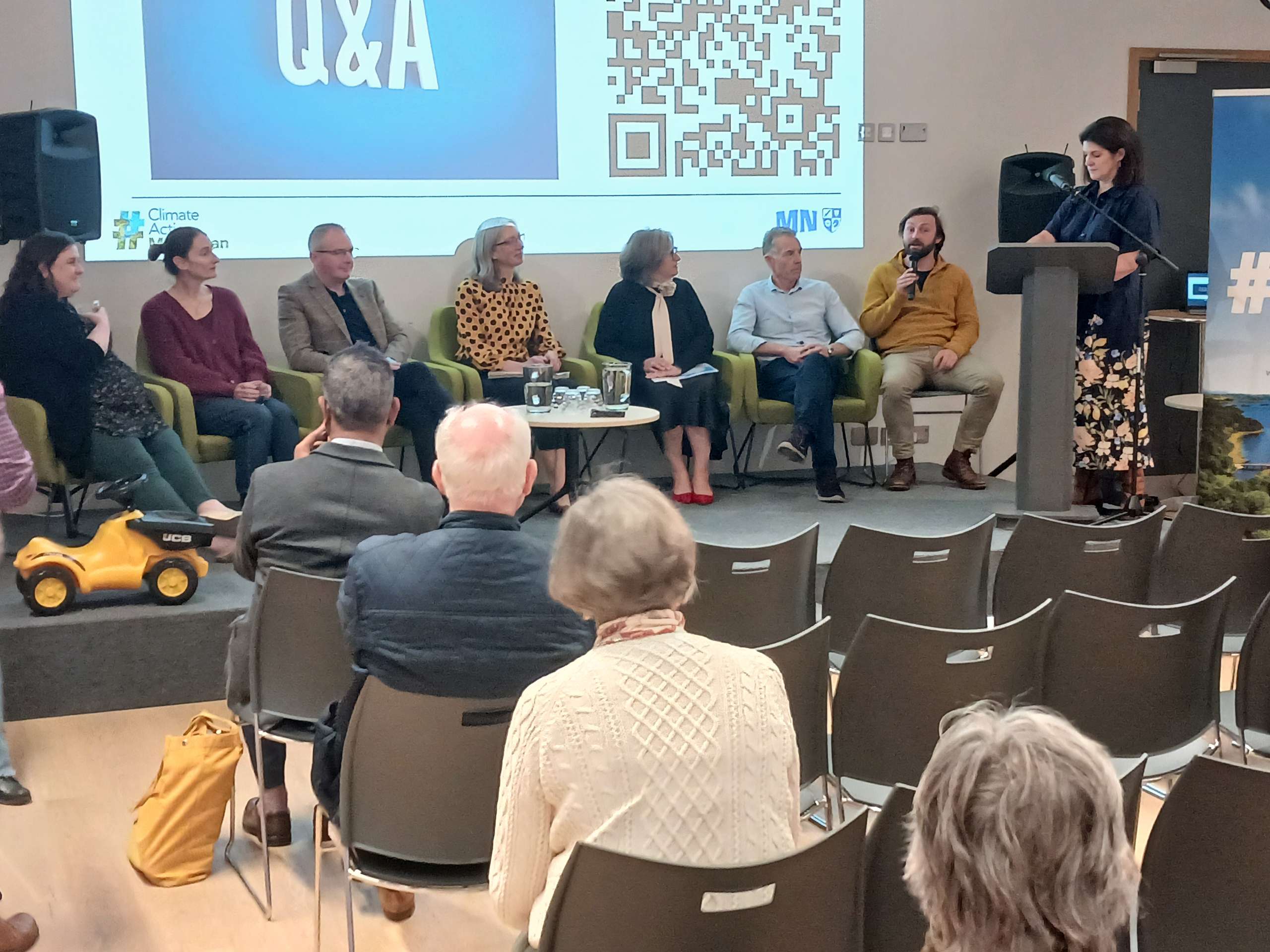
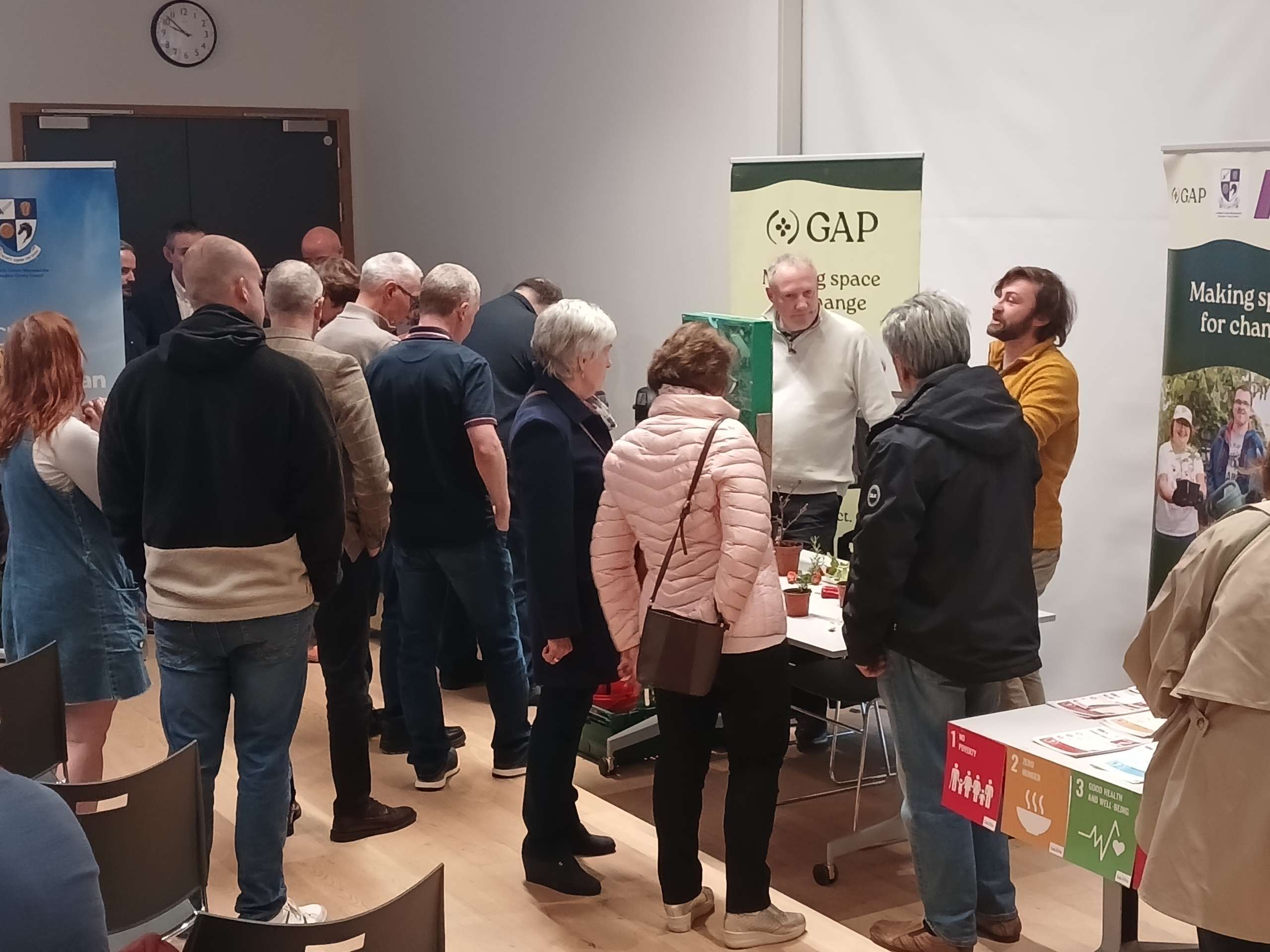
For Climate Action Week 2026, Monaghan County Council highlighted the circular economy with a series of workshops and family-friendly events. GAP attended and organised a number of these, including the Circular Economy in Action Conference, which took place on Saturday 17th October at Monaghan Peace Campus.
The question that brought together policy makers, entrepreneurs and community organisations was “What does a circular economy look like in everyday life?”
And participants provided lots of examples of how ordinary people and community groups all over Monaghan are taking practical action to show that there are plenty of alternatives to our “throwaway economy”, where we take resources, make products, use them once and throw them away.
“The circular economy” means making the most of the things we use by reusing, repairing and recycling them instead of throwing them away. It helps reduce waste, save resources and protect the environment for future generations.
Ireland faces a significant challenge in making better use of the resources already available to us. The country’s circularity rate stands at just 2.7%, meaning most materials used in our economy still come from virgin sources. With a national target of 12% by 2030, there is considerable work to do.
The Whole of Government Circular Economy Strategy 2026–2028 places circularity at the centre of Ireland’s economic and environmental future. It sets out an ambition to reduce waste, keep materials and products in use for longer, and make sustainable choices easier for everyone. For Monaghan, these ambitions align with the County Council’s Climate Action Plan 2024–2029 and its commitment to developing a climate-resilient, low-carbon county.
But a circular economy is about more than national targets and policy. It is about the choices we make every day, the resources we share and the opportunities we create when we work together.
Repairing things is taking climate action
One of the key messages from the conference was that repair is climate action.
Every appliance repaired, piece of furniture restored or product kept in use for longer helps conserve resources, reduce waste and avoid emissions. Sometimes, the most sustainable choice is not to buy something new, but to get more value from what we already have.
The growing movement towards a Right to Repair is helping to change both policy and public attitudes. By making products more durable and repair more accessible and affordable, we can move away from a throwaway culture and towards one that values the things we own.
This shift also brings other benefits. A circular economy can reduce our dependence on raw materials, strengthen resilience to global supply chain disruption, support local jobs and enterprise, and encourage innovation. It can also help lower emissions while creating more sustainable opportunities for future generations.
For communities, it offers a chance to turn these big ambitions into practical, meaningful action close to home.
Growing a circular economy through community gardens
Through its work in Monaghan, GAP Ireland supports people to connect environmental action with community participation, learning and social inclusion.
Community gardens are a great example of the circular economy in practice. They provide opportunities to compost organic waste, grow food and reuse materials. They also create welcoming spaces where people can build relationships, develop new skills and discover what they can achieve together.
The benefits extend well beyond the garden itself. Sharing resources, learning from one another and working towards a common goal can help strengthen community connections while encouraging more sustainable ways of living.
This approach reflects the aims of GAP’s Connect and Grow programme in Monaghan, delivered in partnership with Monaghan County Council with PEACEPLUS support. By bringing people together through environmental activities, the programme connects sustainability with social inclusion and stronger community relationships.
From local action to lasting change
The message of the Circular Economy in Action Conference was clear: building a more sustainable future requires action at every level.
Households can repair, reuse and share. Community groups can create spaces for growing, learning and collaboration. Businesses can explore ways to reduce waste and keep resources in circulation. Public bodies can support the policies, partnerships and infrastructure that make these changes possible.
And that is why, for instance in its Monaghan programme (funded by PEACEPLUS, through SEUPB) GAP hosted practical circular economy workshops in recent weeks, on topics on how to sew or mend your own clothes, and how to save seeds for vegetable plants in your own garden (see some of our past events on Eventbrite).
No single action will close Ireland’s circularity gap, but every practical step contributes to a wider shift in how we produce, consume and value resources. By growing food, repairing what we can, reusing what we have and sharing what we know, we can all play a part in creating a greener, more resilient Monaghan.